

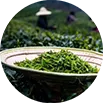

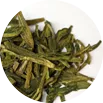
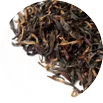
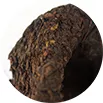
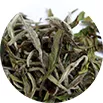
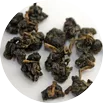
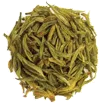
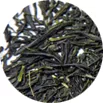
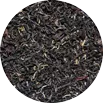
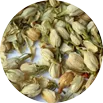



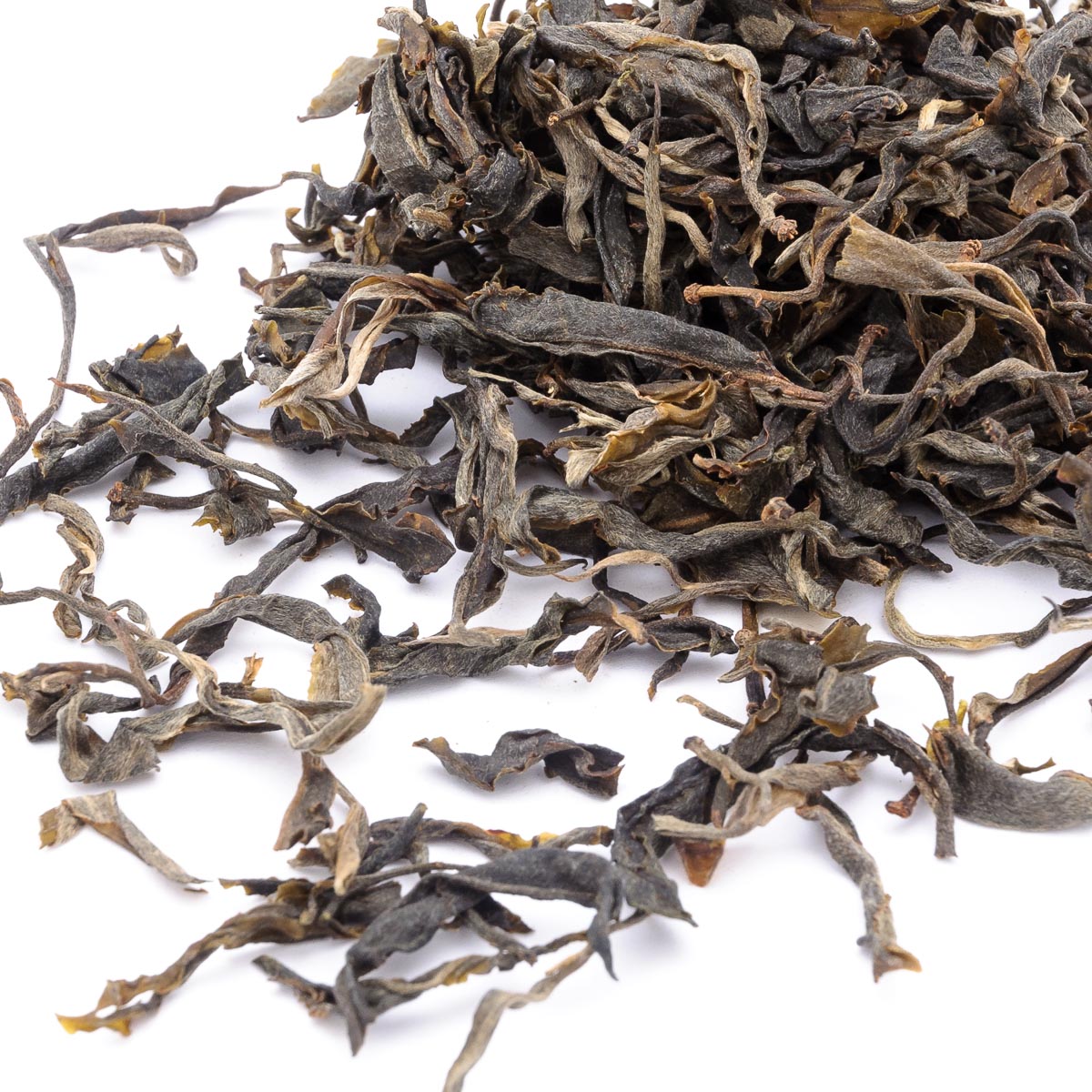
Mao Cha 毛茶 [mao ča] – – literally ‘hairy tea’. In this context, however, the word ‘mao’ should be translated more as ‘crude’, ‘raw’ or ‘unfinished’. The term Mao Cha refers to a pu-erh semi-finished product which is formed at a certain stage of production of any pu-erh. For its production, it is then necessary that the semi-finished product (maocha) is dried in the sun (there are several drying procedures – they determine the quality and taste of tea). This technological step has only one purpose – shaqing. After this step, the tea loses its grassy flavor and fresh green color, on the contrary, it gets soft.
Maocha 2020
Green (sheng) pu-erh or even better maocha from the southern areas of Yunnan. Large leaves (Da Ye) smell thin and very fresh. Tea has traditionally been dried in the sun, without accelerated modern drying in the oven, and therefore does not contain the slightest hint of unpleasant smoked.
The taste is very delicate, sweet and, unlike classic green pu-erhas, it doesn’t even have many fruity tones. You will find in it rather light sweetness and freshness, floral tones and long-lasting gentle aftertaste.
Additional information
| Weight | N/A |
|---|---|
| Origin | |
| Place | |
| Harvest |
Related products
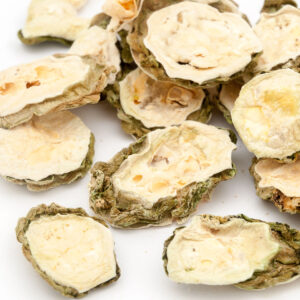
Momordica Charantia (ku gua)
Momordica charantia (ku gua) - creeping or creeping, pumpkin-like plant with herbaceous shoots up to 5 m long. Its tendrils are branched, leaves typically palmately five to seven-lobed, flowers unisexual, five-fold, yellow in color, with distinct veins. The fruits are 5-25 cm long, spindle-shaped, with a wrinkled surface, ripening yellow. The plant has been introduced to virtually all tropical areas.
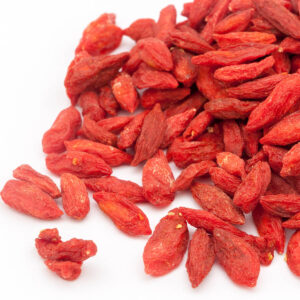
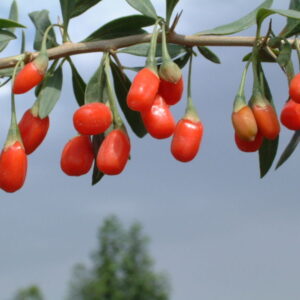
Lycium Chinense (goji)
Fresh, only lightly dried Lycium chinense (goji, wolfberries), which has been used throughout China for centuries.
The shape is a bit like raisins, the taste of the fruit is sweet with a slightly sour aftertaste.
In traditional Chinese medicine (TCM) and among ordinary Chinese, goji is considered an indispensable food supplement. It is known for its benefits to the human body, both in young and old age. No negative side effects are known.
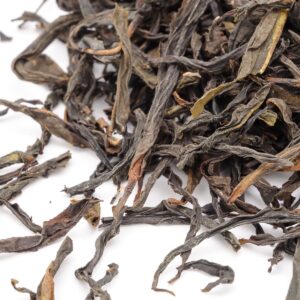
Huang Zhi Xiang
The aroma of tea is sweet and fruity, floral, citrus and peach aromas. In more and more brewing processes, the color of the infusion changed from soft golden pink to amber. The taste is obviously fruity, sweet and refreshing. The aftertaste is strong honey with a gooseberry hue.
This tea can withstand many brews and is definitely one of the most unique teas in our collection at an affordable price, but it is also of high quality.